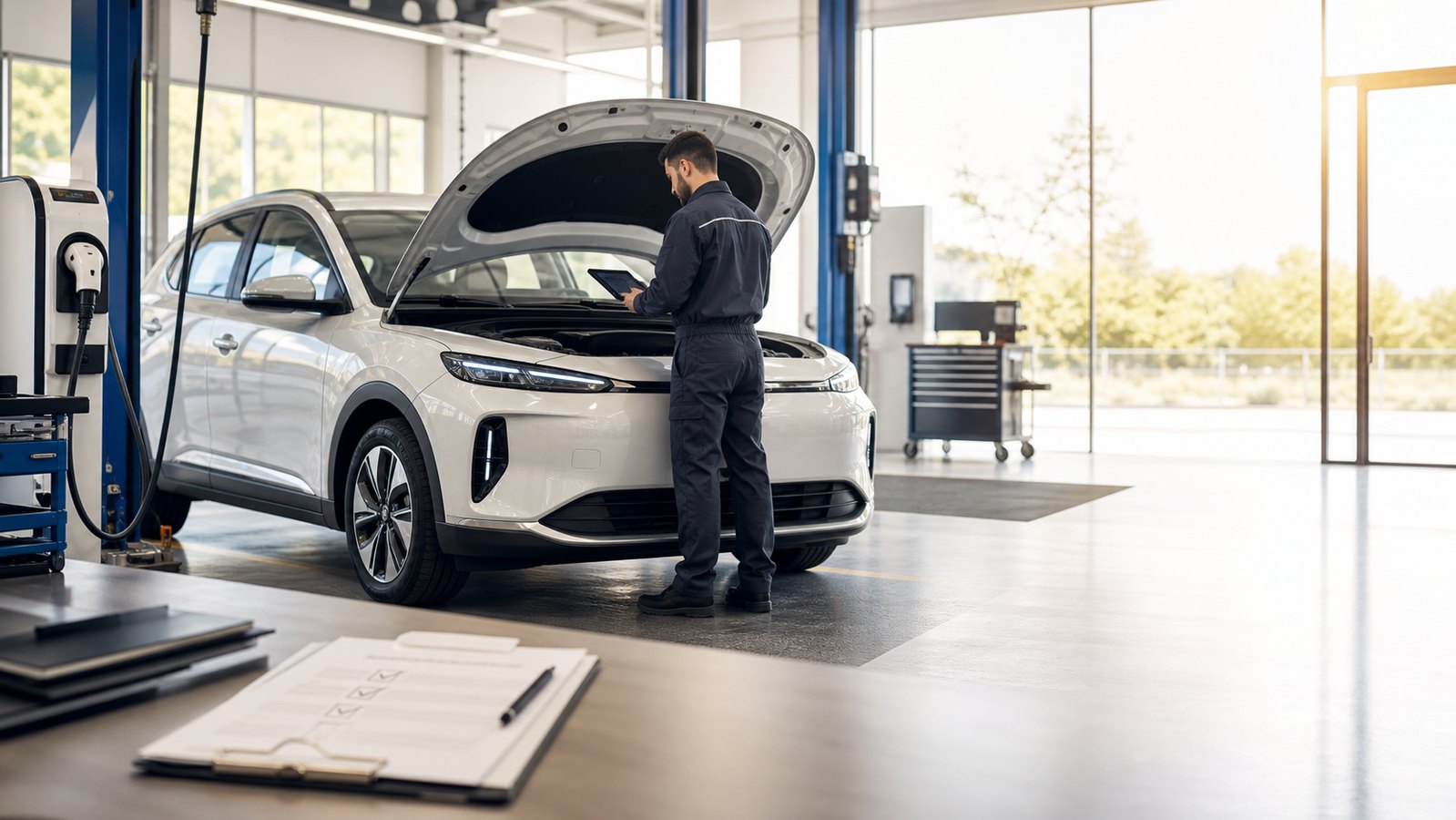


Required Equipment for an Electric Vehicle Authorized Service Center is one of the most critical preparation topics for businesses seeking TSE K646 consultancy before beginning the application process. Electric vehicle authorized service centers require a broader range of safety and measurement equipment than conventional automotive service facilities. During TSE K646 preparation, the equipment list should be planned according to the service category, scope of activities, and specific requirements of the vehicle brands being serviced.
What Does This Guide Cover?
Essential Service Equipment
Vehicle lifting equipment, diagnostic devices, mechanical hand tools, service carts, lighting, compressed air systems, and basic measuring instruments are all part of the general service infrastructure. However, in electric vehicle service facilities, this equipment must be supplemented with specialized tools and safety equipment designed for working with high-voltage systems.
High-Voltage Safety Equipment
Insulated hand tools, insulating mats, voltage detectors, multimeters, insulation testing devices, lockout/tagout (LOTO) equipment, warning signs, and safety barriers are among the most critical equipment required in an electric vehicle service facility. Maintenance records, compliance documentation, and operating instructions for this equipment should also be properly maintained.
Charging Infrastructure and Battery Safety
The service facility should include suitable charging equipment, a designated safe charging area, proper cable management, emergency shut-off procedures, and an appropriate area for battery-related work. The charging infrastructure should be assessed together with the electrical installation, grounding system, and fire safety measures.
Record-Keeping, Calibration, and Maintenance
Simply purchasing the required equipment is not sufficient. Operating instructions, maintenance records, calibration certificates, and designated personnel responsibilities should be properly documented. During a TSE inspection, these records help demonstrate that the facility has an organized and effectively managed equipment control system.
Required Equipment for an Electric Vehicle Authorized Service Center: Checklist
- Insulated hand tools
- Insulating mats and personal protective equipment (PPE)
- Voltage measurement and insulation testing devices
- Charging station and designated safe charging area
- Fire safety equipment
- Calibration and maintenance records
Continue with Related Pages
Before proceeding further with your application preparations, you can review our FAQ page, TSE K646 consultancy service, and TS 12047 consultancy page.
Prepare for the TSE K646 Process Quickly and Thoroughly
Get professional support for service area compliance analysis, required documentation, equipment checks, and preparation for the TSE inspection.
Frequently Asked Questions
Does Every Service Facility Need a DC Charging Station?
The requirement depends on the current needs of the facility, the scope of services provided, and the TSE assessment. The need for AC or DC charging infrastructure should be evaluated before the application process.
Does the Equipment Brand Matter?
The brand is less important than the equipment’s functionality, safety, compliance, supporting documentation, and proper usage records.
Is the Required Equipment List Fixed?
No. The required equipment list may vary depending on the service category, scope of services, vehicle types, and inspection requirements.